
Short answer: A spongy brake pedal usually means air in the brake lines, old moisture-filled fluid, a fluid leak or a failing master cylinder. It reduces braking confidence and should be inspected right away.
By the Bay City Automotive team · Reviewed by shop technicians · Last updated
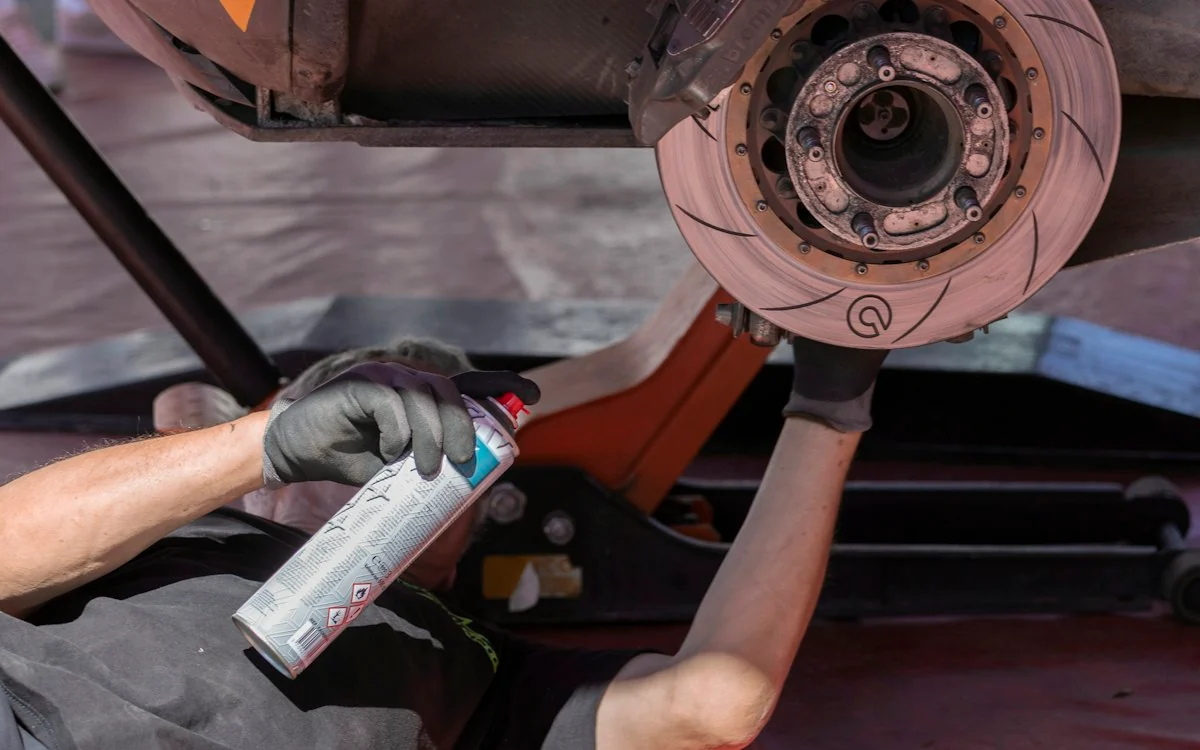
Check the fluid first
Low fluid in the reservoir may point to a leak or very worn pads. Dark fluid suggests it is old and may contain moisture.
Look for leaks
We inspect brake lines, hoses, calipers and wheel cylinders for wet spots. Rubber hoses can swell internally with age and cause a soft feel.
Master cylinder
If the pedal slowly sinks while you hold it at a stop, the master cylinder seals may be leaking internally.
After a brake repair
A soft pedal right after brake work usually means air was left in the lines. Bleeding the brakes in the order the manufacturer specifies removes it, and the pedal should feel firm again before the car leaves the shop.
How Bay City Automotive handles this
Bay City Automotive repairs brakes in Milpitas, from pads and rotors to calipers and fluid. We measure pad thickness and rotor condition, show you the readings and quote only what the measurements support.
Learn more on our brake repair page, or call (408) 942-5488 and a technician will explain your options before any work begins.
Key takeaways
- Check the fluid first.
- Look for leaks.
- Master cylinder.
Frequently asked questions
Is it safe to drive with a spongy pedal?
It is not recommended. Reduced braking can be dangerous, so call us for advice.